
Table of Contents
Performance Max has a reputation problem.
This guide breaks down the nine most common Performance Max mistakes I see quietly draining ad budgets for small businesses — and exactly what to do instead of each one.
Ask Google, and it’s one of the smartest campaign types ever built. Ask advertisers, and you’ll hear everything from “it’s our best-performing campaign” to “it burned through our budget and we still don’t know where the money went.”
The truth is somewhere in the middle.
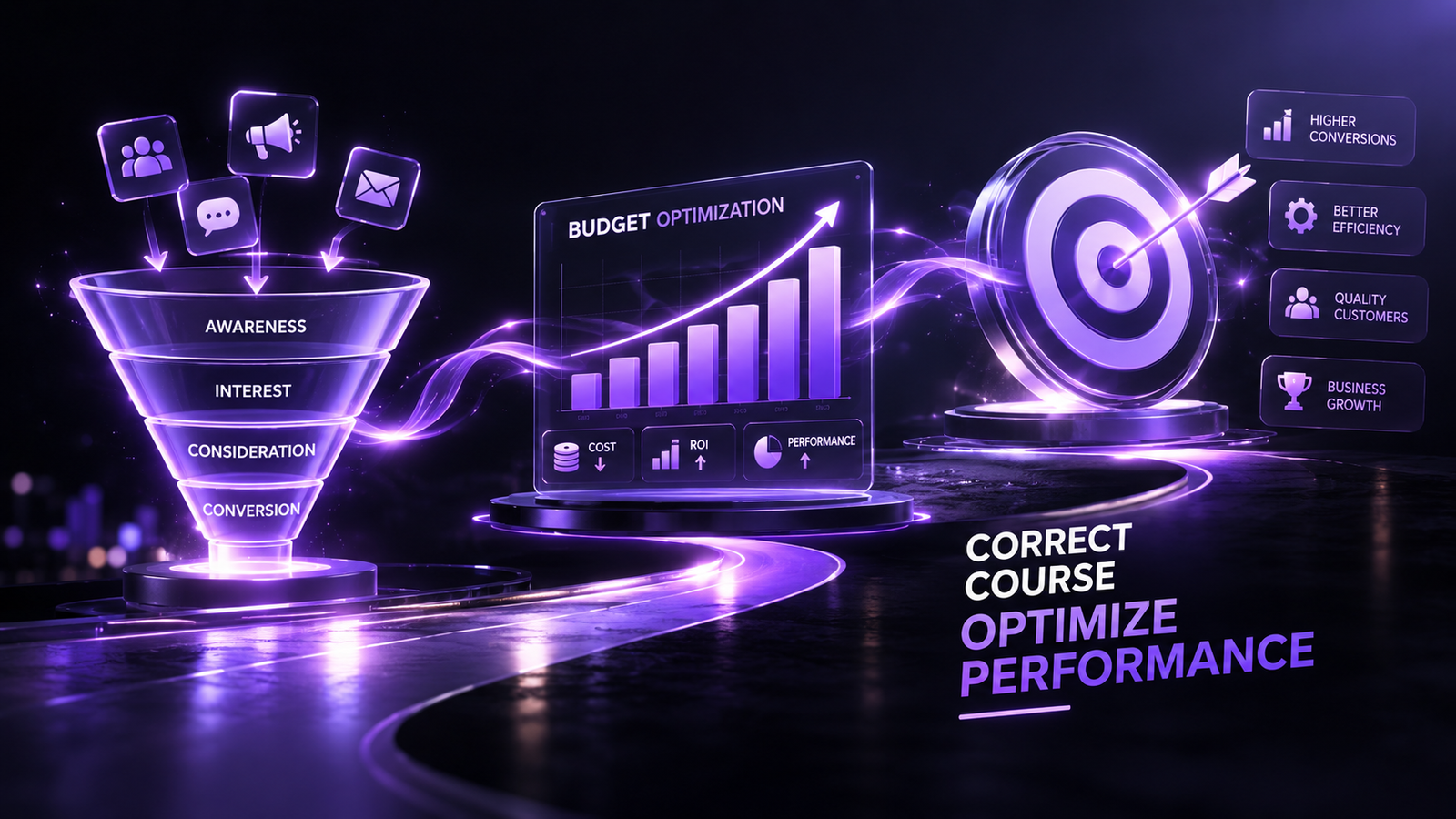
Performance Max isn’t inherently good or bad. It’s simply an automation system. When it’s given strong conversion data, relevant creative, clear campaign structure, and realistic goals, it can produce exceptional results. When those inputs are weak, it can waste money surprisingly fast.
That’s where many businesses get into trouble.
Because Performance Max automates so much of the process, it’s easy to assume it can be switched on and left alone. In reality, some of the biggest budget leaks happen because advertisers trust the automation without giving it the right foundation to succeed.
If your PMax campaigns aren’t delivering the results you expected, there’s a good chance one of these mistakes is the reason.
The Most Common Performance Max Mistakes (And Why They Keep Draining Budgets)
Most of these Performance Max mistakes aren’t dramatic errors — they’re small, easy-to-miss default settings and habits that quietly compound over weeks of spend. Here’s each one, in the order I’d fix them, along with what’s genuinely new in Google’s own 2026 Performance Max controls.
1. Launching on Target ROAS or Target CPA from Day One
One of the fastest ways to handicap a new Performance Max campaign is to launch it with a strict ROAS or CPA target before Google has enough data to understand who your ideal customers are.
It’s a common mistake. Advertisers set an aggressive target because they want efficiency from day one. The problem is that the algorithm hasn’t learned anything yet. It doesn’t know which audiences convert best, which placements perform well, or which creative resonates most.
As a result, the campaign either struggles to spend or chases conversions unpredictably while trying to satisfy a target based on almost no information.
What to do instead:
Start with Maximize Conversions or Maximize Conversion Value without a target. Give the campaign room to learn. Once you’ve accumulated a meaningful amount of conversion data—many practitioners use 30 conversions as a minimum benchmark—you can begin introducing ROAS or CPA goals.
Patience in the early stages often pays for itself later.
2. Dumping Every Product or Service Into One Campaign
Performance Max loves volume.
If you put your entire catalog or service offering into a single campaign, Google will naturally prioritize whatever already generates the most conversions.
On the surface, that sounds efficient.
In reality, it often means your best-selling products get even more exposure while newer products, high-margin offers, or strategic services receive very little budget. They never collect enough data to prove their potential because they’re constantly competing against established winners.
Many advertisers don’t realize this is happening until months later.
What to do instead:
Segment campaigns based on product categories, service lines, profit margins, or business priorities. Give important products their own budgets and room to generate data.
The goal isn’t to create dozens of campaigns. It’s to prevent your entire strategy from revolving around a handful of products simply because they had an early advantage.
3. Skipping Brand Exclusions
This is one of the most overlooked Performance Max mistakes.
Without brand exclusions, PMax may spend a significant portion of its budget showing ads to people who are already searching for your business name.
Those conversions look fantastic in the dashboard. ROAS goes up. CPA goes down. Everyone feels good.
But here’s the question many advertisers never ask:
Would those people have converted anyway?
In many cases, the answer is yes.
The campaign gets credit for conversions that were already likely to happen, creating an inflated picture of performance and making growth appear stronger than it actually is.
What to do instead:
Use brand exclusions when your objective is customer acquisition or incremental growth. Review Search Insights regularly and pay close attention to how much of your reported performance comes from branded traffic.
Sometimes the most profitable-looking campaigns are simply taking credit for demand that already existed.
4. Never Checking Where the Budget Actually Goes
One of the biggest frustrations with Performance Max is that your budget can quietly drift into places you never intended it to go.
Search might be driving profitable conversions while Display placements, mobile apps, and low-quality inventory consume a surprising amount of spend behind the scenes.
Because many advertisers only look at overall campaign results, they never notice the imbalance.
By the time they investigate, thousands of dollars may have already been spent on placements that generated little value.
What to do instead:
Review placement reports regularly.
Sort placements by spend and identify where budget is actually being allocated. Look for websites, apps, or channels consuming significant spend without contributing meaningful conversions.
You don’t need to obsess over every placement, but you should know where your money is going.
2026 update: Google added a native Budget Report inside Performance Max with end-of-month spend forecasting and scenario modelling — check it weekly instead of relying on manual channel-spend guesswork. It’s documented in Google’s own Performance Max guidance.
5. Treating Negative Keywords and Exclusions as Optional
A lot of advertisers assume that because Performance Max is highly automated, exclusions no longer matter.
That’s simply not true.
While you don’t have the same keyword-level control available in traditional Search campaigns, you still have tools available to prevent obvious waste.
Ignoring exclusions often means paying for searches and placements that were never likely to convert in the first place.
What to do instead:
Maintain account-level negative keyword lists and placement exclusions.
Terms like “free,” “jobs,” “careers,” “training,” or irrelevant competitor-related searches frequently deserve attention depending on your business model.
Likewise, review placements regularly and exclude low-quality inventory when necessary.
Automation works best when guardrails are in place.
2026 update: Google has also rolled out first-party audience list exclusions, letting you exclude existing customers from a campaign entirely so budget redirects toward net-new acquisition instead of re-targeting people who’d have bought anyway.
6. Feeding It Generic, One-Size-Fits-All Creative
Many advertisers treat creative as an afterthought.
They’ll spend hours adjusting bidding strategies and budgets while uploading the same generic images, headlines, and descriptions they’ve been using for years.
Then they wonder why Performance Max struggles to scale.
The reality is that PMax relies heavily on creative assets. Those assets help Google understand who should see your ads and which messages resonate with different audiences.
Weak creative limits performance no matter how sophisticated the bidding strategy is.
What to do instead:
Build asset groups around specific products, services, or audience segments.
Use different messaging for different offers. Create unique images that match each category. And whenever possible, provide your own video assets instead of relying on Google’s auto-generated versions.
Better creative doesn’t just improve engagement—it gives the algorithm stronger signals to work with.
7. Ignoring Audience Signals and Search Themes
One of the biggest myths about Performance Max is that Google doesn’t need any guidance.
Technically, the platform can find new customers on its own.
The problem is that learning who your customers are can become an expensive process if you’re starting from scratch.
Without audience signals, customer lists, website visitor data, or relevant search themes, Google may spend valuable budget exploring audiences that have little chance of converting.
Eventually, it may find the right people.
But you’ll likely pay for that education.
What to do instead:
Provide audience signals from the beginning.
Upload customer lists, include website visitors, build custom segments, and use Search Themes where appropriate.
These signals don’t restrict Performance Max. They simply give it a smarter starting point.
And smarter starting points usually lead to faster results.
2026 update: Google is rolling out “AI Brief,” a Gemini-powered set of messaging, audience, and matching guidelines for Performance Max — a genuine new lever for steering the system away from generic creative, worth testing as it becomes available on your account.
8. Ignoring the Landing Page and Conversion Experience
This might be the most expensive mistake on the list.
Many advertisers spend weeks optimizing campaigns while barely looking at the page visitors see after clicking the ad.
The campaign drives traffic.
The traffic arrives.
And then the landing page fails to convert.
Maybe it’s slow. Maybe the offer isn’t clear. Maybe the page doesn’t match the ad. Maybe the call-to-action is buried halfway down the page.
Whatever the reason, the result is the same.
You pay for the click, but the conversion never happens.
What to do instead:
Audit landing pages before increasing budgets.
Make sure every page loads quickly, aligns with the ad’s message, and presents a clear next step.
In many accounts, improving the landing page delivers bigger gains than tweaking anything inside Google Ads.
9. Confusing Attribution with Incrementality
This is where many advertisers get misled.
Performance Max may report excellent ROAS while contributing far less new business than the dashboard suggests.
Why?
Because attribution and incrementality are not the same thing.
A conversion attributed to PMax isn’t necessarily a conversion created by PMax.
Some of those customers may have converted through branded search, direct traffic, email campaigns, or other channels if the campaign had never existed.
That’s why relying solely on platform-reported numbers can create a false sense of success.
What to do instead:
Run controlled tests whenever possible.
Reduce budgets temporarily. Test different regions. Compare overall business performance rather than focusing only on campaign-level reporting.
The goal is to understand what Performance Max is truly adding—not just what it’s claiming credit for.
2026 update: those same first-party audience exclusions double as a built-in holdout mechanism, making genuine incrementality testing far more accessible than it used to be — no separate geo-experiment required to get a directional read.
The Bigger Pattern
When you look at these mistakes together, a pattern starts to emerge.
Most advertisers don’t lose money because Performance Max is broken.
They lose money because they assume automation eliminates the need for strategy.
It doesn’t.
Performance Max still needs clean conversion data. It still needs strong creative. It still needs thoughtful campaign structure, audience guidance, landing page optimization, and regular oversight.
The difference is that when something goes wrong, it’s often less obvious than it would be in a traditional Search campaign. Poor traffic can hide behind a strong-looking ROAS. Branded searches can inflate conversion numbers. Weak creative can quietly limit growth without triggering any obvious warning signs.
That’s why the advertisers getting the best results from Performance Max in 2026 aren’t necessarily the ones spending the most money.
They’re the ones paying attention.
They review placement reports. They maintain exclusions. They test creative. They improve landing pages. They question attribution numbers instead of accepting them at face value.
In other words, they treat Performance Max as a tool—not a strategy.
And that’s usually the difference between a campaign that scales profitably and one that quietly drains budget month after month.
If your account is still on a shoestring budget while you fix these Performance Max mistakes, it’s worth revisiting the fundamentals first — our budget-friendly Google Ads strategy for small businesses covers the same discipline (clear goals, negative keywords, honest measurement) at a smaller spend.
Final Thoughts
Performance Max remains one of the most powerful tools inside Google Ads.
But despite all the automation, success still comes down to fundamentals.
Give the algorithm clear goals, quality data, strong creative, and a solid conversion experience, and it can become a powerful growth channel.
Ignore those fundamentals, and the automation may simply help you waste money faster.
The businesses seeing the strongest PMax results in 2026 aren’t winning because they’ve discovered a secret setting.
They’re winning because they’ve built better systems around the campaign.
And that’s something no algorithm can do for you.
The Short Version
The nine Performance Max mistakes that quietly waste budget: launching straight into Target ROAS/CPA, dumping every product into one campaign, skipping brand exclusions, never checking where spend actually goes, treating negative keywords as optional, feeding it generic creative, ignoring audience signals, ignoring the landing page experience, and confusing attribution with real incrementality. Fix the foundation first — the automation only amplifies what you give it.
For the full official picture of how the campaign type is meant to work, Google’s own Performance Max documentation is worth a read alongside this list. And if you’d rather have a second pair of eyes look at your account than reverse-engineer these mistakes alone, you’re welcome to get in touch — or see what a realistic digital marketing budget looks like in Kochi if you’re deciding between managing this yourself and bringing in help.