
Table of Contents
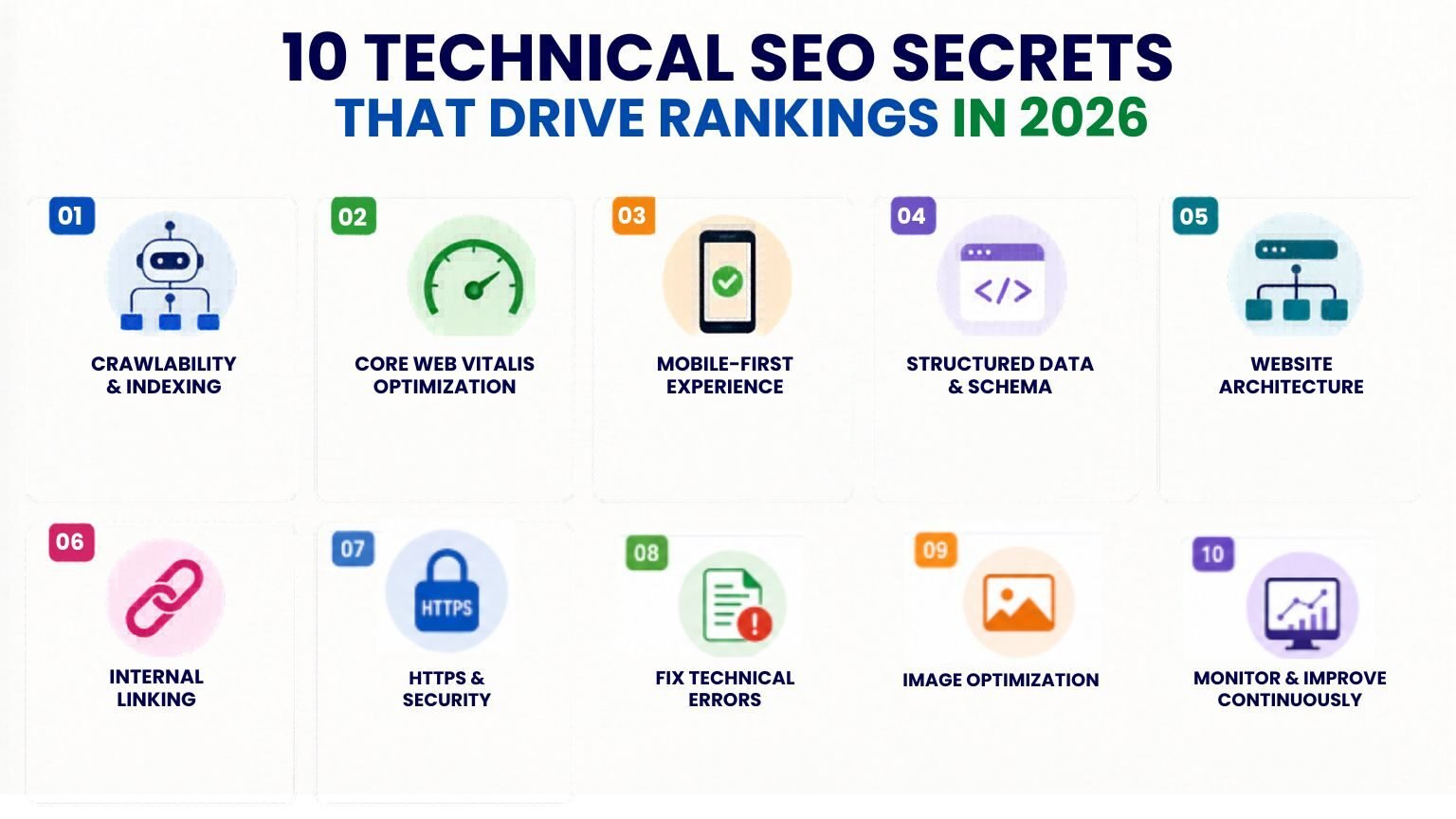
Search engine optimization has evolved dramatically over the last few years, but one thing remains constant — websites with strong technical SEO consistently outperform their competitors.
In 2026, Google is smarter, users are less patient, and competition is tougher than ever. You can publish amazing content and still struggle to rank if your website has technical issues behind the scenes.
Technical SEO is no longer just for developers. It’s now a critical part of digital growth, user experience, and online visibility. From page speed and indexing to mobile optimization and structured data, every technical element influences how search engines understand and rank your website.
In this guide, we’ll explore the 10 most effective technical SEO secrets that are driving rankings in 2026 and how you can apply them to improve your website performance.
1. Improve Crawlability and Indexing
If search engines cannot crawl your website properly, your content simply won’t rank.
Google relies on bots to discover and index pages. Poor site structure, broken links, blocked resources, or outdated XML sitemaps can prevent important pages from appearing in search results.
Best Practices:
- Keep your XML sitemap updated
- Use a clean robots.txt file
- Fix crawl errors regularly
- Remove broken links and redirect chains
- Submit your sitemap through Google Search Console
A technically optimized website makes it easier for search engines to understand your content and rank it faster.
Helpful Resources:
2. Prioritize Core Web Vitals
Core Web Vitals continue to play a major role in technical SEO in 2026.
Google wants websites to deliver fast, stable, and smooth user experiences. Slow-loading websites frustrate users and increase bounce rates, which can negatively impact rankings.
The three key Core Web Vitals metrics are:
- Largest Contentful Paint (LCP)
- Interaction to Next Paint (INP)
- Cumulative Layout Shift (CLS)
Ways to Improve Core Web Vitals:
- Compress large images
- Use modern image formats like WebP
- Minimize unnecessary JavaScript
- Enable browser caching
- Use a fast hosting provider
Even a one-second improvement in page speed can significantly improve engagement and conversions.
External Resource:
3. Build a Mobile-First Website
Mobile-first indexing is now standard.
Google primarily uses the mobile version of your website for ranking and indexing. If your site performs poorly on smartphones, your SEO performance will suffer regardless of desktop quality.
Mobile SEO Essentials:
- Responsive design
- Fast mobile loading speed
- Readable fonts
- Optimized tap targets
- Minimal intrusive popups
A mobile-friendly website not only improves rankings but also creates a better experience for real users.
4. Use Structured Data and Schema Markup
Schema markup helps search engines better understand your content.
Structured data improves the chances of earning rich snippets, FAQs, review stars, product details, and enhanced search visibility.
Popular schema types include:
- Article schema
- FAQ schema
- Product schema
- Local business schema
- Breadcrumb schema
Adding structured data is one of the smartest technical SEO strategies for increasing click-through rates.
Helpful Tool:
5. Optimize Website Architecture
Website architecture directly affects technical SEO performance.
A clean structure helps both users and search engines navigate your website more efficiently. Confusing navigation and poorly organized content can dilute ranking authority.
Strong Website Architecture Includes:
- Clear navigation menus
- Logical URL structure
- Internal linking strategy
- Organized content categories
- Minimal orphan pages
Simple website structures generally perform better because they improve crawl efficiency and user experience.
6. Strengthen Internal Linking
Internal linking remains one of the most underrated technical SEO techniques.
Strategic internal links help search engines discover content, distribute authority, and understand relationships between pages.
For example, if you publish content about SEO strategy, you can internally link it to:
- Technical SEO guides
- Website optimization services
- Core Web Vitals articles
- Digital marketing resources
Internal Link Best Practices:
- Use descriptive anchor text
- Link relevant pages naturally
- Avoid excessive links
- Update older content regularly
You can also link readers to your own strategy and digital growth insights through
7. Secure Your Website with HTTPS
Website security is a confirmed ranking signal.
Google prioritizes secure websites because they protect user data and build trust. If your website still uses HTTP instead of HTTPS, it may negatively impact credibility and rankings.
Security Improvements That Matter:
- Install SSL certificates
- Update plugins regularly
- Use secure hosting
- Enable firewalls
- Monitor malware issues
Security is no longer optional in technical SEO.
8. Fix Technical Errors Regularly
Many websites lose rankings because small technical problems go unnoticed for months.
Common technical SEO issues include:
- 404 errors
- Duplicate content
- Broken redirects
- Missing meta tags
- Slow-loading pages
- Incorrect canonical tags
Regular technical audits help identify and fix problems before they impact rankings.
Recommended SEO Tools:
9. Optimize Images for Search and Speed
Image optimization is often ignored, but it plays a major role in technical SEO.
Large, uncompressed images can slow down websites dramatically. Proper image optimization improves speed, accessibility, and search visibility.
Image SEO Tips:
- Compress images before upload
- Use descriptive file names
- Add keyword-rich alt text
- Use lazy loading
- Choose modern formats like WebP
Optimized images improve both user experience and technical performance.
10. Monitor Technical SEO Performance Continuously
Technical SEO is not a one-time task.
Google’s algorithms continue to evolve, and websites must adapt regularly. Continuous monitoring helps you stay competitive and identify issues early.
Key Metrics to Track:
- Crawl errors
- Index coverage
- Core Web Vitals
- Mobile usability
- Organic traffic
- Bounce rates
- Page speed
Consistent optimization leads to long-term ranking stability.
Final Thoughts
Technical SEO is the foundation behind every successful website in 2026.
You can create excellent content and build backlinks, but without proper technical optimization, your website will struggle to achieve its full ranking potential.
The good news is that most technical SEO improvements are practical, measurable, and highly effective when implemented correctly.
Start by fixing crawlability issues, improving Core Web Vitals, optimizing mobile performance, and strengthening your website structure. Over time, these improvements can significantly increase search visibility, traffic, and conversions.
Businesses that invest in technical SEO today will have a major competitive advantage tomorrow.
Pingback: Best Free SEO Tools for Small Business Owners in 2026